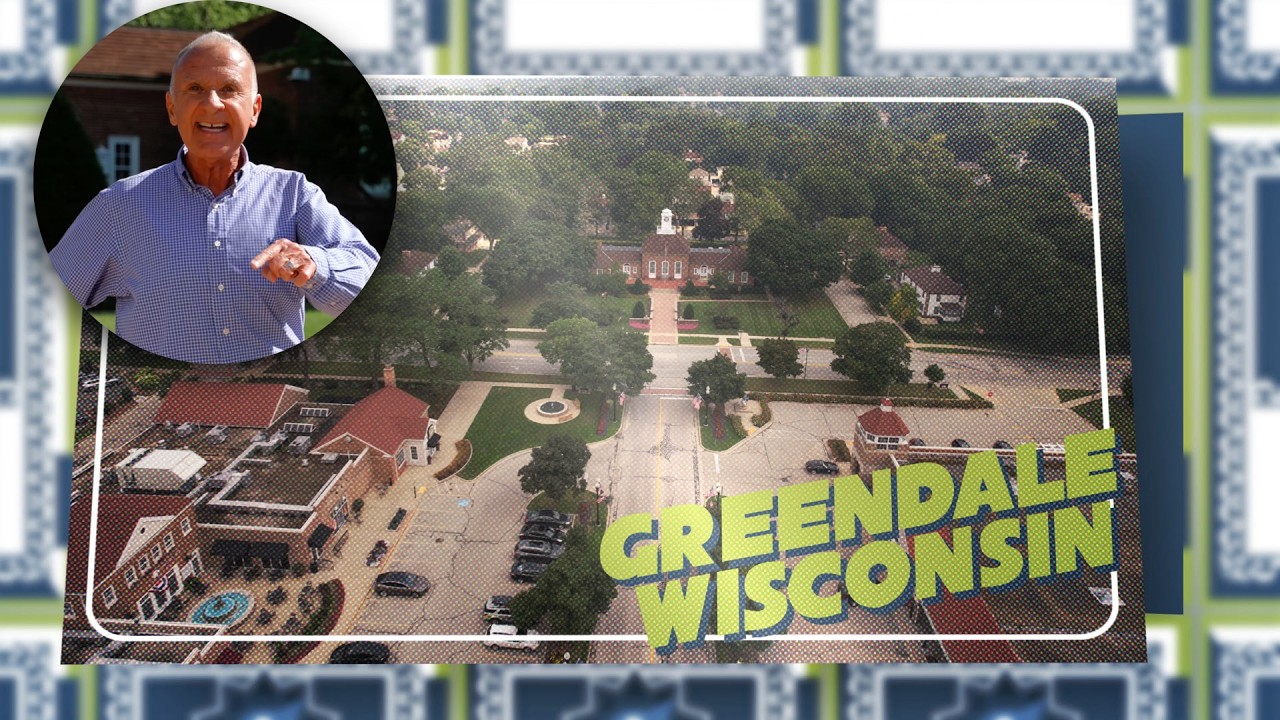
Greendale, Wisconsin,
is a planned village just eight miles southwest of downtown Milwaukee, where design, history, and daily life remain closely connected.
Built in 1938 as part of a New Deal initiative, Greendale was created to offer working families an affordable, walkable community near a major city. That original vision still shapes how the village looks, functions, and feels today.
The village was carefully planned from the beginning. Homes were built using local labor, and the layout emphasized connection—both physical and social. Streets were designed as short, often dead-end routes, each ending in pedestrian pathways that link neighborhoods together. Those paths still allow residents to move through the village with minimal reliance on major roads.
Designed for Connection
The physical layout of Greendale encourages interaction. Homes were intentionally placed close to the street, with shared green space behind them. Backyards connect, creating informal communal areas where neighbors naturally meet.
These design choices extend to the village center, where pathways from every section converge. From the beginning, this central area was meant to provide essential services within walking distance. Today, Broad Street continues to serve as Greendale’s core, maintaining its role as a gathering place and commercial hub.
Greendale’s history is not only preserved but actively interpreted across the village. Sixteen historical markers throughout the village center highlight key people, events, and design features that shaped the community.
A Strong Arts and Music Culture
Greendale’s emphasis on community extends into its arts programs. Local schools play a significant role, offering music opportunities beginning in fourth grade and continuing through high school.
Theater is another important part of Greendale’s cultural life. Community productions draw from a mix of professional, emerging, and local talent, creating a range of performances that maintain a high standard while remaining accessible. This combination reinforces the village’s focus on participation and shared experience.
Local Businesses and Everyday Life
Greendale’s village center supports a range of locally rooted businesses that reflect both tradition and change. Restaurants offer a mix of approaches, from small-plate dining concepts focused on from-scratch cooking to a café-and-restaurant space that shifts from daytime coffee service to evening Latin American cuisine.
This variety is intentional. Business owners emphasize offering distinct experiences rather than duplicating what already exists, contributing to a balanced and diverse local economy.
Public Spaces and Shared Identity
Greendale’s identity is also visible in its public spaces. Each year, the village plants more than 40,000 flowers, contributing to a consistent and intentional visual environment. These efforts, combined with preserved architecture and maintained green space, reinforce the original design principles of the community.
Greendale remains closely tied to the ideas that shaped it in 1938. Its walkable design, connected neighborhoods, and centralized village core continue to influence how people live and interact. While the community has grown and adapted, those foundational elements remain intact.



 Subscribe to Main Streets on YouTube